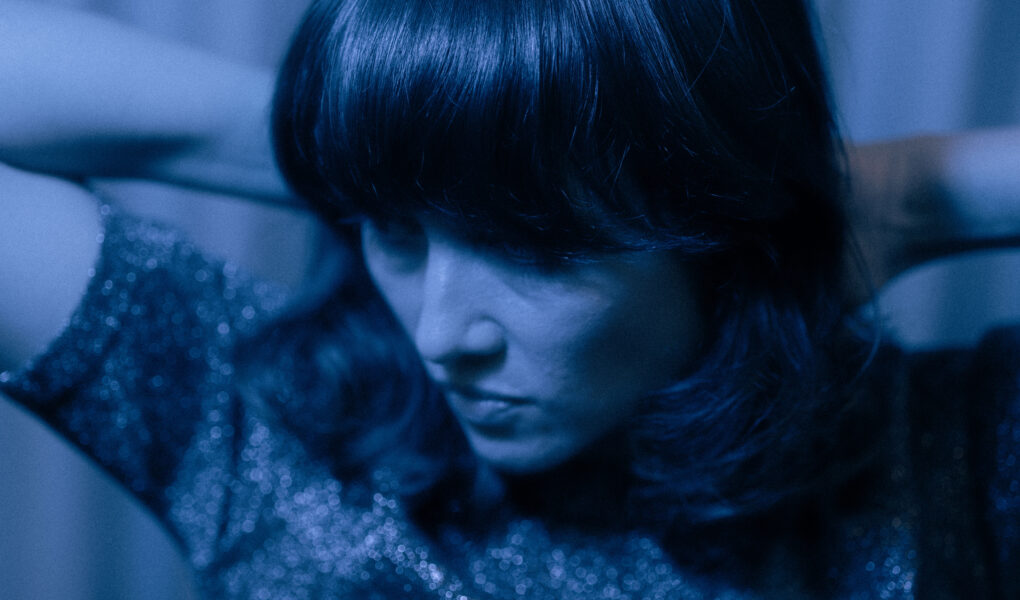
Blending electronic textures and pop persuasions, Amaya Laucirica’s new album The Blue Hour, is a unique delve into liminal spaces and profound transformation.
Exploring the midlife experience alongside the themes of love, change and personal evolution, Amaya channels her world into a kaleidoscope of genres and vivid storytelling, culminating in a nine track album which, like its namesake, plays between worlds focusing on the fleeting moments from darkness to light, endings to beginnings.
To celebrate the release of The Blue Hour, Amaya took Marx Music through her self described “middle-aged coming-of-age”, self-acceptance as an evolving artist and the beauty and tragedy found within life.

Marx Music: Amaya, congratulations on The Blue Hour. I understand you took a different approach to this album, allowing a few years to hone your craft?
Amaya: Yeah, it's a relief and it’s very exciting. I started writing for the album in 2018 and I think I wrote about three songs, then I had my daughter. I wrote a bulk of the material just after she was born, from 2019 to 2021 and the songs that I wrote after she was born had a different character about them. I started recording the album with the live band and it just wasn't working, so it needed a new approach. After a few years of trying to figure out how I was going to do it, I approached a producer, James Cecil and we decided to work on the project, just me and him. I learned a lot about recording and about my own style.
MM: That concept of The Blue Hour even came through in the journey of making the album it seems, not just in the themes you explore. You have described the album as your ‘middle age coming of age'. How does self-discovery compare now to when you were younger?
Amaya: In your 20’s you’re young and exploring things, but you're not really thinking about an outcome. You're just doing things. Whereas I think when you're older, you're a little bit more considered. I know what my limits are and I just have a bit more clarity when I create now. I don't have so much anxiety about making music.
Shaped by personal growth and life’s diverse experiences, Amaya’s latest work demonstrates her evolution as an artist as she explores contrasting themes and the fleeting transient moments often overlooked.
MM: The album really moves through those momentary spaces and juxtaposing themes, from light to dark, hopeful to unsure. They’re very fine lines between, so how do you capture that transitional space and translate it musically?

Amaya: That’s a really good question, I think, the songs kind of lean themselves into being introspective and reflective by nature. A lot of the songs could have gone in so many different directions. A lot of the songs have this introspection and they did lend themselves to going in a lot of different styles. This album has country, pop and dance and it covers a lot of musical terrain.
Channeling different styles and allowing the songs to organically direct themselves, Amaya’s latest body of work was guided by visual concepts and storyboarding, resulting in a synesthetic experience of sound and colour.
Amaya: When we were putting it together, I think it was really important to consider how all these songs were going to fit as a cohesive album. There was a lot of pre-production and looking at the song's like characters. This is why the album is called The Blue Hour, because we kind of visually saw the songs as various times of the day. Some songs sounded like they were in the dark of the night and some songs sounded like they were just at the start of sunrise. For instance, When I'm With You is a character that I invented for the song because the song's really sad and it's about somebody who's trapped in a relationship.
While some tracks such as What I Cannot See or Here I Am are assigned characters of Amaya’s own creation to aid in their storytelling, tracks such as Tumbling Light are rooted in poignant reflection on real people who’ve touched the artist’s life. Drawing on these experiences, she has crafted lyrics which span the shared human experience of loss, allowing her to honour people individually while ensuring listener relatability.
MM: Tumbling Light is a tribute to a musician that you once knew. How do you approach writing a song about a person, ensuring you capture truth while balancing creative expression, without mythologizing them?
Amaya: When I was writing that song, it was very similar to On the Edge where I wasn't sure what I was about to write. I went to the piano and started writing that song and it had this lovely lightness about it on the album. I guess it has dark themes of somebody passing away and I think when I wrote that song, I didn't go into too much detail about the event. I kind of just very lightly, you know, refer to it. That song is about somebody I know who passed away, but I tried to make it into a song that was for anybody who has known somebody who passed away. I didn't make it too centric about that person or too centric about me.
When asked to capture the heart of the album in three words, Amaya aptly describes The Blue Hour as, “immediate, feminine and introspective.”
Drawing influence from artists such as Kate Bush, Kylie Minogue and Portishead, The Blue Hour is an invitation into Amaya Laucirica’s blue-washed world in which themes of love, life’s shifts and the fear of the unknown are explored alongside the ephemeral preceding moments.
A collection of personal tracks that remind us to pause and observe the minute moments of life with equal awe of the large, The Blue Hour is a captivating listen.